

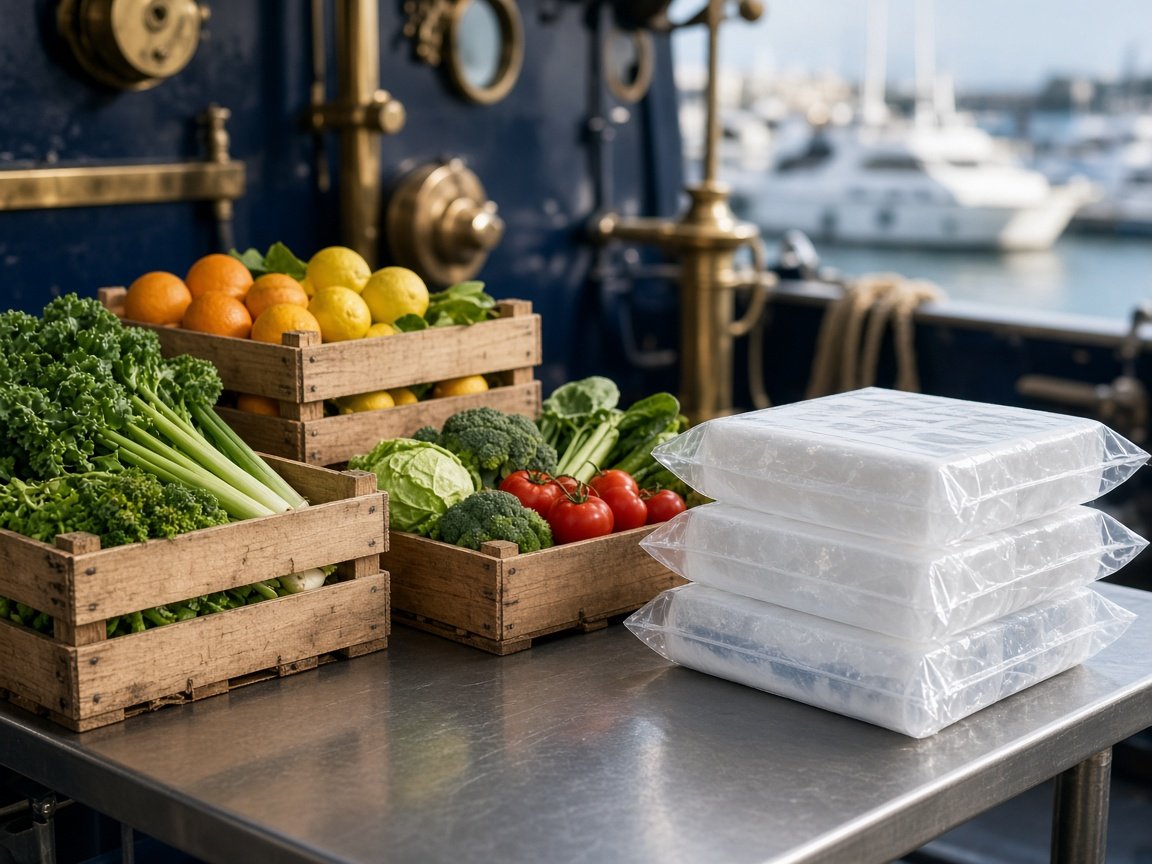
Provisions are an essential part of crew welfare. A ship that sails with poor stores, broken cold chain or a list that ignores the nationalities on board will feel that mistake for weeks. VERKAN MARITIME supplies fresh, frozen and dry provisions for merchant vessels, matched to the requisition, the storage the ship actually has, and the time the vessel will be in port or at anchorage. Hygiene and a realistic delivery slot matter as much as the brand names on the list.
Multinational crews do not eat from a single menu. A useful order names quantities, dietary requirements, and any items that must be halal, vegetarian or suited to a particular cuisine. It also names what the ship cannot store. There is no value in landing a volume of fresh produce that the chillers cannot hold, or frozen cartons that will sit on a hot deck while bunkers are taken. The desk plans the handover with the Chief Cook or the officer appointed by the Master, not only with a purchasing clerk ashore.
What can be supplied
Fresh fruit, vegetables, dairy, meat, seafood and bakery items are sourced for the voyage length the operator states. Frozen protein, vegetables and prepared items cover the weeks when fresh stores will run down. Dry stores — rice, flour, oils, tinned goods, beverages, condiments and cleaning items that travel with the food order — are consolidated so the ship receives one delivery sequence rather than a scatter of vans. Specialty items are included when the requisition asks for them and the local market can provide them inside the vessel’s window. If a line cannot be matched, the desk proposes a substitute before the order is closed, rather than swapping it silently on the quay.
Packing follows the storage. Chilled and frozen goods travel in a way that protects temperature until they are in the ship’s rooms. Dry goods are separated from anything that can leak or taint. Crates are marked for the galley, not with a code only the supplier understands. A packing list travels with the delivery and matches the physical count the cook will sign.
- Fresh, frozen and dry provisions against the ship’s requisition
- Dietary and cultural requirements stated up front
- Temperature-aware packing and a delivery slot tied to the vessel
- A packing list the ship can count and file
How an order is coordinated
Send the requisition with vessel name, ETA, berth or anchorage, and the last time stores can be accepted. Highlight short-dated fresh items and anything the cook has marked as critical. VERKAN checks availability, flags lines that need a longer lead, and confirms whether delivery is alongside or by launch. Prices and substitutions are agreed before buying is finished. If the vessel’s departure is advanced, the desk prioritises frozen and dry goods that are already packed and tells the ship which fresh lines can still make the gangway.
At delivery, the attending person stays until the ship’s representative has had a fair chance to count the categories that spoil first. Shortages, damage or a refused substitute are noted on the receipt, not argued about a week later. Empty packaging and pallets are removed if the ship asks and the berth allows it. For an anchorage delivery, the launch plan is shared with the duty officer so the deck is ready and the cold rooms are clear.
Hygiene and the ship’s own standard
VERKAN works with suppliers who handle food for professional kitchens and expects clean vehicles, intact packaging and a cold chain that is still cold at the rail. The ship remains free to reject goods that do not meet its own standard. That rejection should happen at delivery, with the item identified, so a replacement can be attempted inside the port stay. Documentation — the packing list and the signed receipt — is what the operator and the cook both keep.
A port call is the right moment to replenish, and it is a short moment. Share the list, the storage limits and the sailing time with the Singapore desk. The team will propose a delivery that fits the vessel, and will say clearly if a line cannot be landed in time.