

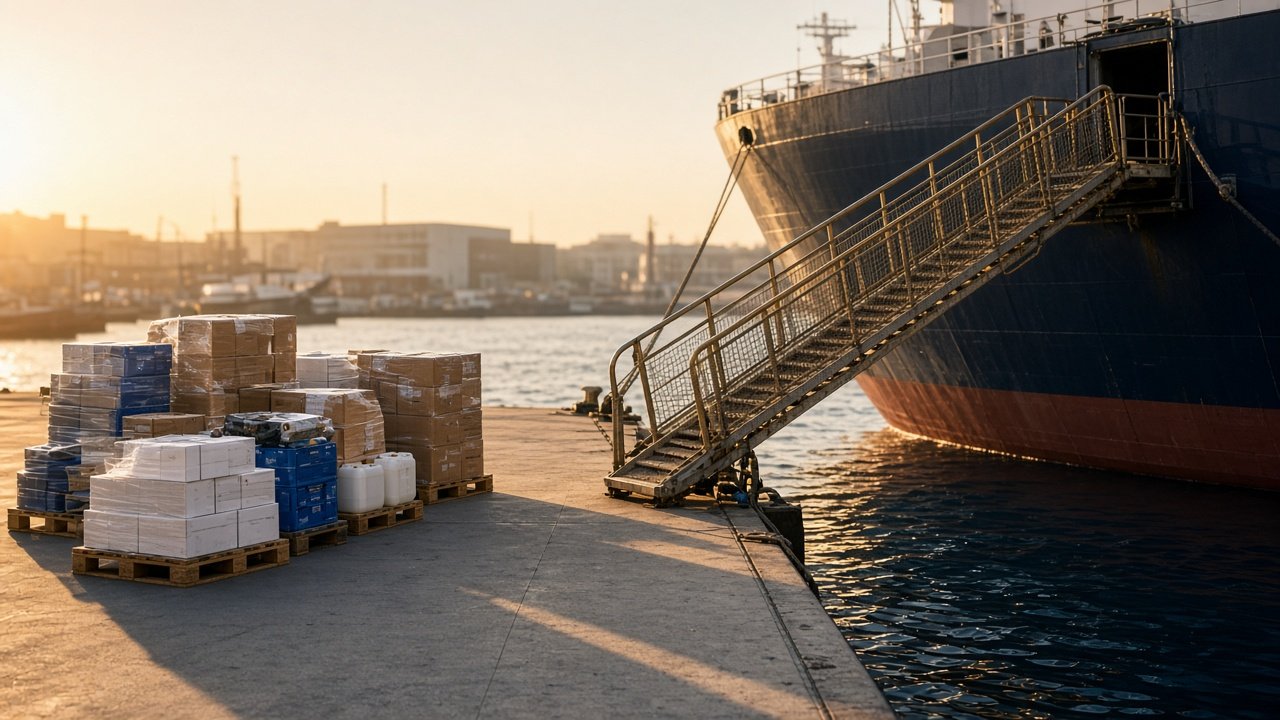
A port call is the practical moment to replenish provisions, land spare parts and clear the other husbandry that cannot be done at sea. It is also a crowded moment. Bunkers, cargo, surveys and crew changes compete for the same hours and the same side of the ship. Supply goes well when the requisition is clear and the vessel’s real window is understood. It goes badly when a perfect list arrives after the chandlers have closed, or when a crate of spares is addressed to “the agent” with no berth and no receiving officer.
Start with two documents, not ten email threads. One is the provision list: quantities, dietary requirements, items that must stay chilled or frozen, and anything the cook has marked as critical. The other is the technical list: an accurate description, a reference the engineers use, the documents that travel with the part, and the dimensions if it is large. Both should name the vessel, the ETA and the last time the ship can receive stores. A list without a deadline is a wish.
Match the order to the ship, not the catalogue
Fresh and frozen food needs handling that dry stores do not. Tell the supplier what cold-room space is free, not only what the crew would like. Over-ordering fresh produce feels generous and becomes waste if it sits on deck through a cargo stoppage. For technical spares, the description has to be specific enough that the correct part is cleared and delivered. A photo, a part number and the maker beat a generic name. If papers are missing, say so early. Clearance cannot begin from a tracking number alone when the invoice and packing list are still in someone else’s inbox.
Substitutions should be proposed, not hidden. A cook can accept a different brand of rice. An engineer cannot accept a pump that is merely similar. Agree the substitute before it is bought, and keep urgent lines separate from routine ones. When the ETD comes forward, the urgent crate should already be packed, labelled and assigned to a vehicle or a launch. The routine top-up can wait for the next port. Mixing them in one delivery is how the critical item misses the gangway because the truck was still waiting for a non-critical pallet.
One plan, visible to the ship
Combining provisions, spares and other husbandry into a single timetable reduces duplicated calls and shows the Master what is coming, and when. The Chief Cook and the Chief Engineer do not need each other’s detail, but they do need to know if they are sharing a launch or a gangway slot. Send them the relevant section of the plan, with a contact who will answer if the berth changes. Anchorage delivery adds weight, weather and ladder limits. A pallet that was fine for the quay may be wrong for the boat. Flag that before the goods leave the warehouse.
Count at handover. Shortages and damage belong on the receipt while the delivery is still alongside, when a replacement might still be possible. A complaint written after sailing is a claim. A note written on the quay is a correction. Keep the packing list and the signed page with the ship’s papers. The same habit applies to landed items going the other way: name the forwarder, the collection time and who on board will release the goods.
Leave room for the urgent exception
Most of a port call can be planned. Some of it cannot. A failed component on arrival, or a fresh order the cook only understands after opening the rooms, needs a separate short arrangement. That exception works better if the routine order is already under control. The desk then spends the remaining hours on the surprise, not on reconstructing a list that should have been sent yesterday.
VERKAN MARITIME supplies provisions and handles ship spares and stores from Singapore, including clearance and delivery to the vessel. Share the requisition, the storage limits and the sailing time. The team will say what can reach the ship inside the window, and what should be deferred rather than rushed.