

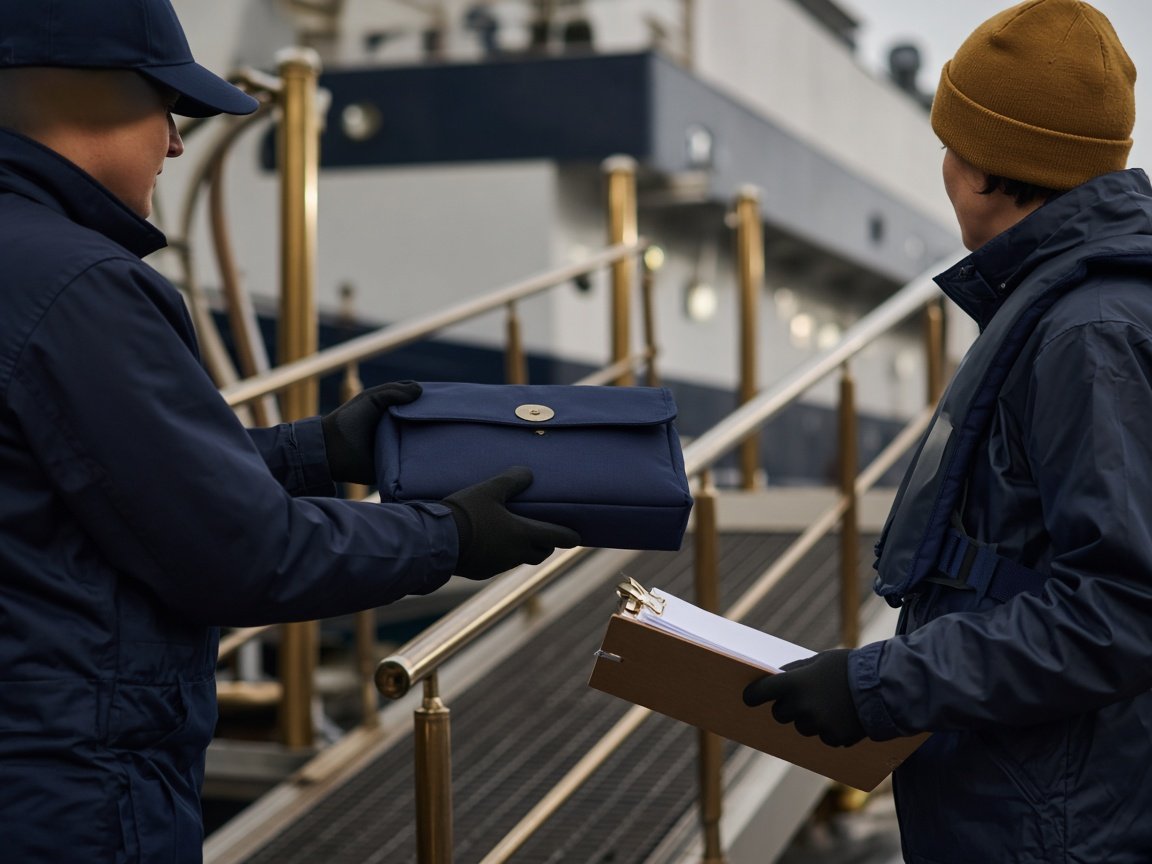
Cash to Master is a routine part of ship operations and a sensitive one. Masters need funds for crew advances, port expenses and the small purchases that cannot wait for a bank transfer, and owners need to know that the amount which left the account is the amount that reached the ship. VERKAN MARITIME coordinates CTM delivery with the same discipline used for stores: a named vessel, a named recipient, a confirmed window, and a paper trail both sides can file.
The service is discreet. Delivery is arranged through secure channels, not discussed in open copies of email threads that circulate around a full agency distribution list. Foreign-exchange needs are quoted before the movement is fixed, so the Master is not surprised by the currency mix on the gangway. Timing follows the vessel. A delivery that misses the berth and chases the ship to anchorage costs more and exposes the funds for longer, so the desk would rather reset the slot than force a rushed handover.
What is arranged
Once the principal confirms the amount, currency and beneficiary, VERKAN agrees the delivery point: gangway, launch, or a location the Master has approved. The person who will receive the funds is named in advance. If the Master delegates the handover, that instruction is written, not passed verbally through a third party on the day. Competitive exchange arrangements are confirmed in the quote, including which currency will be counted on board.
The handover itself is short and witnessed. Funds are counted with the receiving officer, a receipt or acknowledgement is signed, and a copy is returned to the operator. Serial or seal details are recorded where the delivery method uses a sealed pouch. Nothing in the service depends on informal “it was passed to the agent” messages. If the vessel’s sailing is brought forward, the desk either completes the delivery inside the new window or holds the funds and tells the principal immediately. Funds are not left with an unnamed person to “pass on later”.
- Confirmed amount, currency and named receiving officer
- Exchange arrangements agreed before the delivery moves
- A slot tied to berth, anchorage or launch
- Signed acknowledgement returned to the operator
How a delivery is prepared
The request should state the vessel, ETA, port or anchorage, amount, currency, and the email address that may approve a change. VERKAN replies with the practical constraints: banking cut-off, the notice the movement needs, and whether a launch is required because the ship will not be alongside. Only after that confirmation does the desk commit to a delivery time. Last-minute increases are possible only when the extra amount can be prepared without breaking the security of the original movement. If it cannot, the original amount proceeds and the balance is scheduled separately.
On the day, the courier or attending staff carry only the information they need: vessel name, berth or launch point, and the name of the receiving officer. They do not discuss the sum in public areas of the terminal. At the ship, counting happens in a suitable space, not on an open deck in front of unrelated visitors. The signed acknowledgement records the amount, currency, date, time and the name of the officer. A scan or photograph of that page is sent to the principal the same day, and the original follows by the method the operator prefers.
Records and responsibility
CTM is not a favour and it is not an informal loan. It is a documented movement of funds belonging to the principal, delivered to the Master for the ship’s use. VERKAN’s role is coordination and controlled delivery, with a record that stands up if accounts, auditors or a relieving Master ask what happened. Applicable rules on declaring or carrying cash are checked for the port in question before the movement, and the principal is told if a planned method is not appropriate.
To open a delivery, write to the Singapore desk with the vessel, the window, the amount and the currency. The team will confirm timing, the exchange basis and the handover steps before any funds are moved. If the schedule changes after confirmation, send the new ETA immediately so the delivery can be reset rather than improvised.