

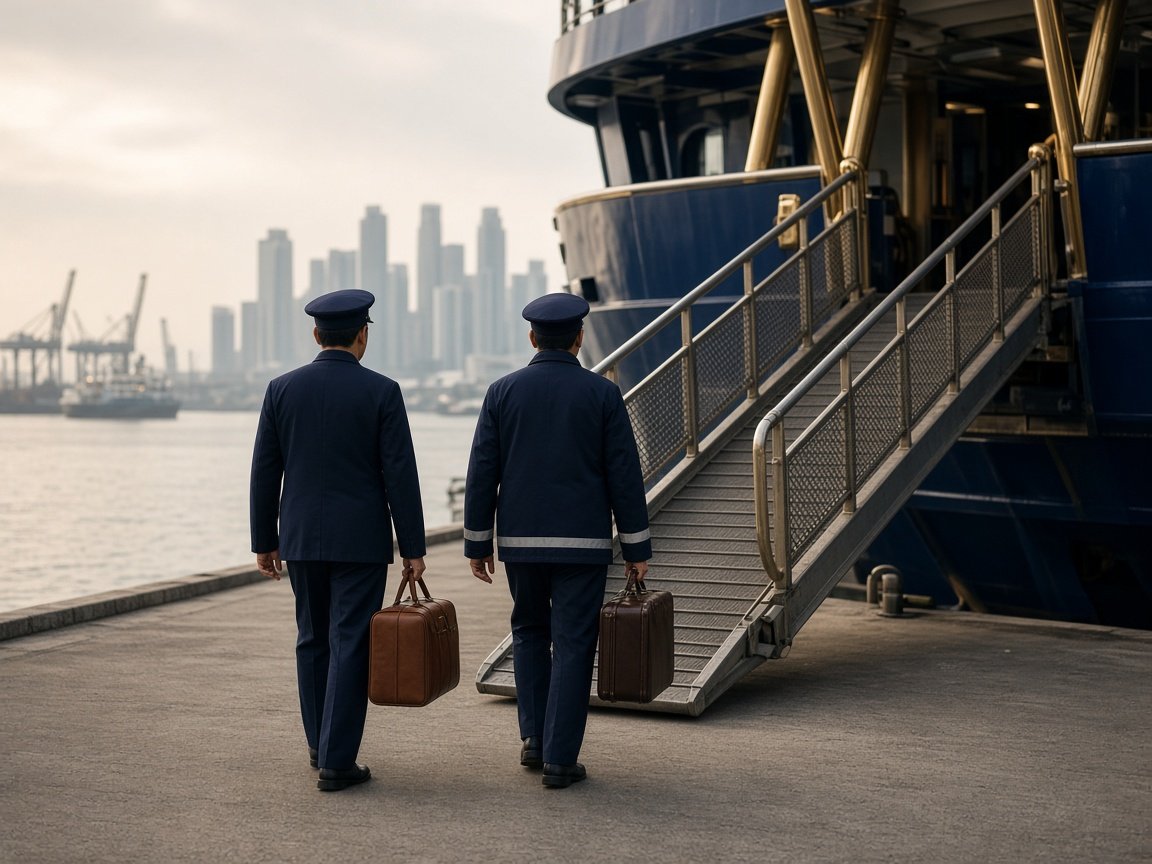
A crew change looks simple on a movement list and becomes complicated the moment a flight, a visa, a launch or a berth window slips. VERKAN MARITIME coordinates the shore side of that movement for vessels calling Singapore and for operators who need a single desk to keep joining and signing-off crew, agents and the ship on the same plan. The service covers visa-related arrangements, transport and accommodation, timed to the vessel rather than to a generic office day.
The people involved rarely sit in one place. A superintendent may be in another time zone, the Master is managing cargo or bunkers, the joining seafarer is still in transit, and immigration rules at the intended port can differ from the last call. Early, complete information is what keeps those parties from working on different assumptions. VERKAN asks for the vessel name, port or anchorage, ETA and ETD, the joining and signing-off names, nationalities, ranks, travel itineraries and a local contact who can approve a change if the schedule moves.
What the coordination covers
Visa and entry questions are confirmed against the current requirements for the nationality and the port, not against last year’s practice. Where invitations, appointments or supporting letters are needed, the desk lines them up before the seafarer flies. Transport is arranged from airport to hotel, hotel to launch or terminal, and back again for crew leaving the ship. Accommodation is booked for the nights the movement actually requires, with a preference for rest before duty rather than a dash from the aircraft to the gangway.
Meet-and-greet instructions are written in plain language: who will be holding the name board, which terminal exit to use, and what to do if a flight is diverted. When an airline changes a connection, the desk rebooks the ground side — vehicle, room and launch slot — and tells the ship what has changed. Crew welfare stays inside the plan. That means realistic connection times, safe vehicles, a contact number that answers, and clear written instructions the seafarer can keep on a phone.
- Visa-related arrangements and the documents the port is likely to ask for
- Airport transfers, hotel nights and movement between hotel, terminal and launch
- Updates when ETA, berth or flight times move
- A single status the operator, agent and Master can share
How a movement is run
The first message should be a movement sheet, even a rough one. Ranks, passport nationalities and whether each person is joining or leaving are more useful than a long narrative. VERKAN confirms which items are already in hand and which still need a decision, then proposes a sequence: arrival, rest, formalities, transfer, embarkation or the reverse for sign-off. If the vessel is at anchorage, the launch booking is tied to the same sequence so crew are not waiting on the water or on the pier without a boat.
On the day, the desk tracks the flights that affect the gangway and speaks to the ship’s contact before anyone is sent forward. If the vessel’s departure is brought forward, signing-off crew are moved first and joining crew are held or rerouted rather than left without a cabin. If the vessel is delayed, hotel extensions and fresh launch times are requested before the original booking expires. After the movement, a short note records who embarked, who landed, and any document that still needs to travel with the ship.
What to send before the vessel arrives
Passport biodata, ranks, nationalities, intended flight numbers, and the port or anchorage are the minimum. Add vaccine or medical certificates only where the port currently requires them, and say so explicitly. Flag any seafarer who needs extra time ashore, a hospital visit, or a same-day connection. The earlier a schedule change is shared, the fewer unused rooms and missed launches the operator pays for.
VERKAN MARITIME does not replace the ship’s agent or the owner’s crew department. It coordinates the practical chain those offices rely on, and it keeps the communication in one thread. For a planned relief or an urgent deviation, send the vessel, the port, the dates and the crew list to the Singapore desk. The team will confirm what can be arranged and what the current port rules require before tickets and boats are committed.